Planet
Forest Planet
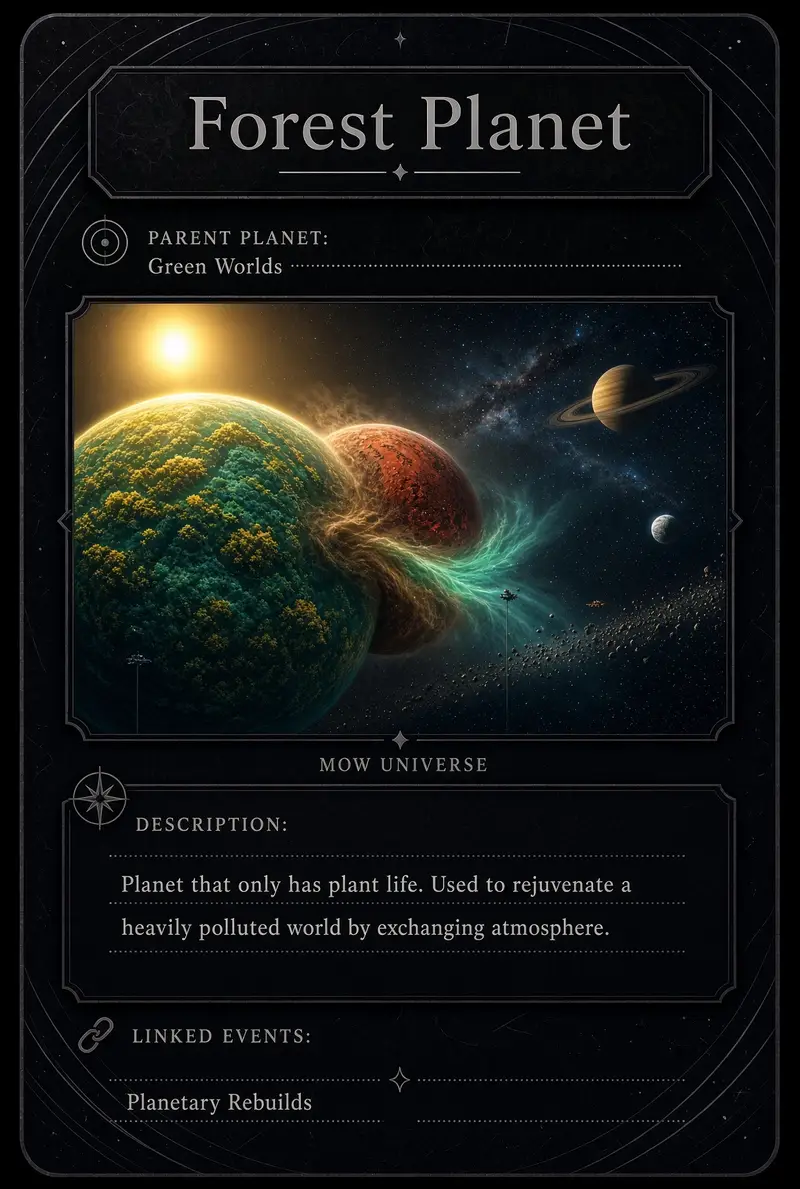
A Green Worlds planet type used in Planetary Rebuilds.
Function
When a planet starts to die from overpopulation or pollution, the only way to save it and still allow the planet’s inhabitants to stay on it is to clean the toxins out of the atmosphere. With a process called Atmosphere Transplant, the planet’s plants can start producing breathable atmospheric gases again. To do this a forest planet is needed – and yes, it is exactly what it sounds like.
Surface
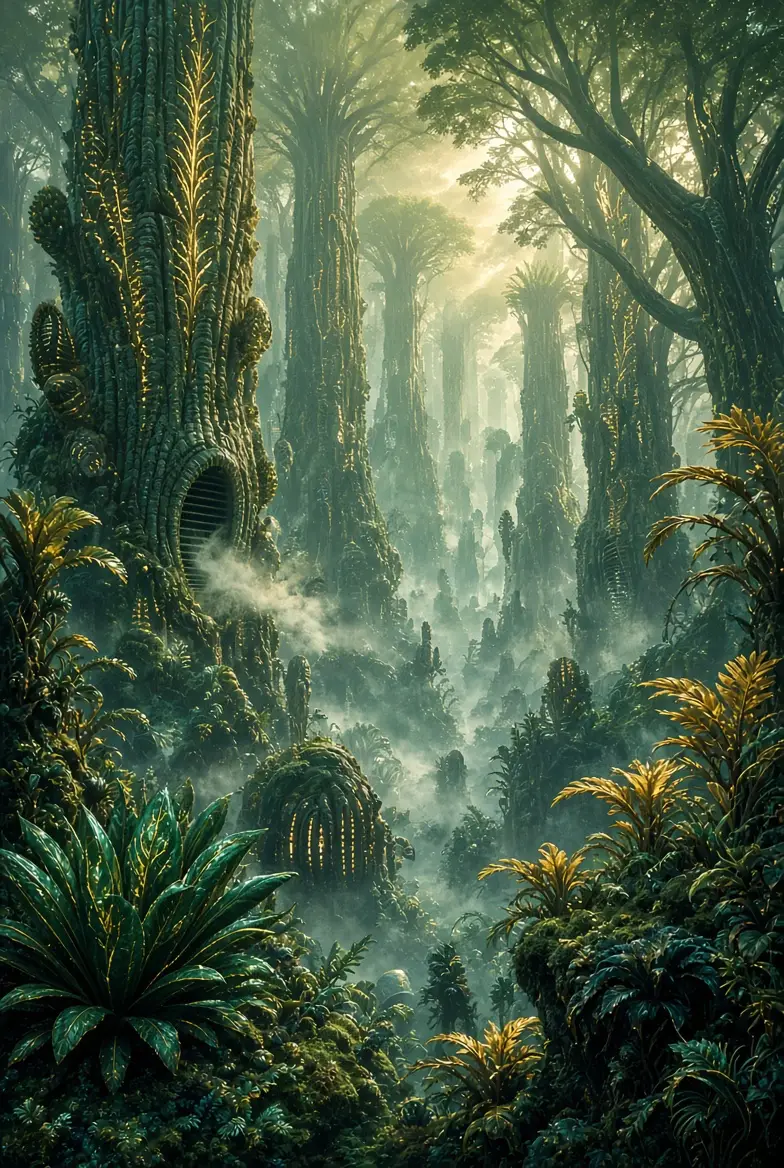
These planets have low gravity and no animal or higher life – just plants, most of which have been modified across the entire surface. These plants are genetically designed to produce atmospheric gases at a much higher rate than any natural ones, also increasing their growth rate and reducing their fruit production. That lets them grow like weeds across the entire surface in a matter of years, and with low gravity the speed only increases. Due to the rapid growth covering the surface, lakes, oceans, even volcanoes are completely covered, leaving only plants visible from space.
The largest and most productive is Planet 221, with gravity one-twentieth of Earth standard while being 100 times the size of Earth – even bigger than the average gas giant. It was also the first successful use of Atmosphere Transplanting, when it was used to repair the atmosphere of Mars so it could become New Earth, the first fully terraformed planet to remain stable with no ongoing terraforming activity.
Atmosphere Transplant
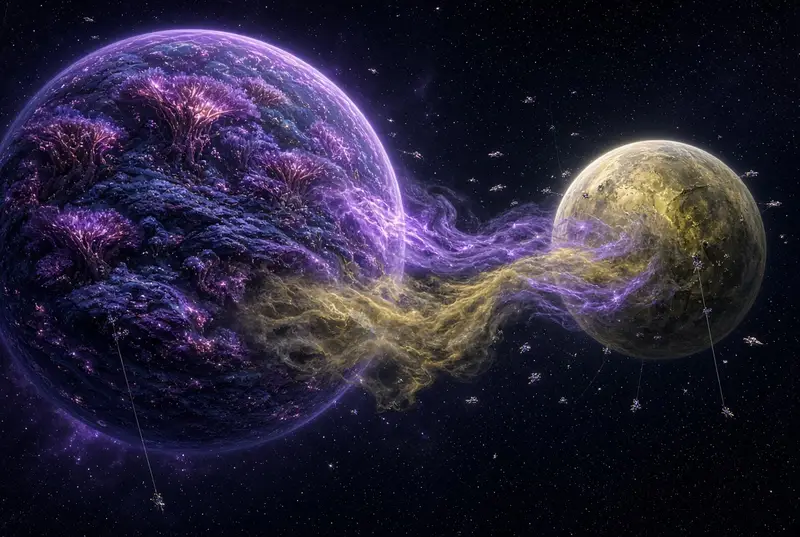
Though a simple concept, the process is a massive undertaking. It involves moving a Forest Planet out of its home solar system to a new solar system where the planet to be repaired resides. The forest world is then moved into close orbit of the world to be fixed – close enough for the two atmospheres to touch and mix, like a moon. Over the next 3 to 6 months, depending on pollution levels and planet size, the Forest Planet stays in orbit while the atmospheres mix. Pollution slowly transfers onto the forest world as levels on the other world drop, in a process much like osmosis.
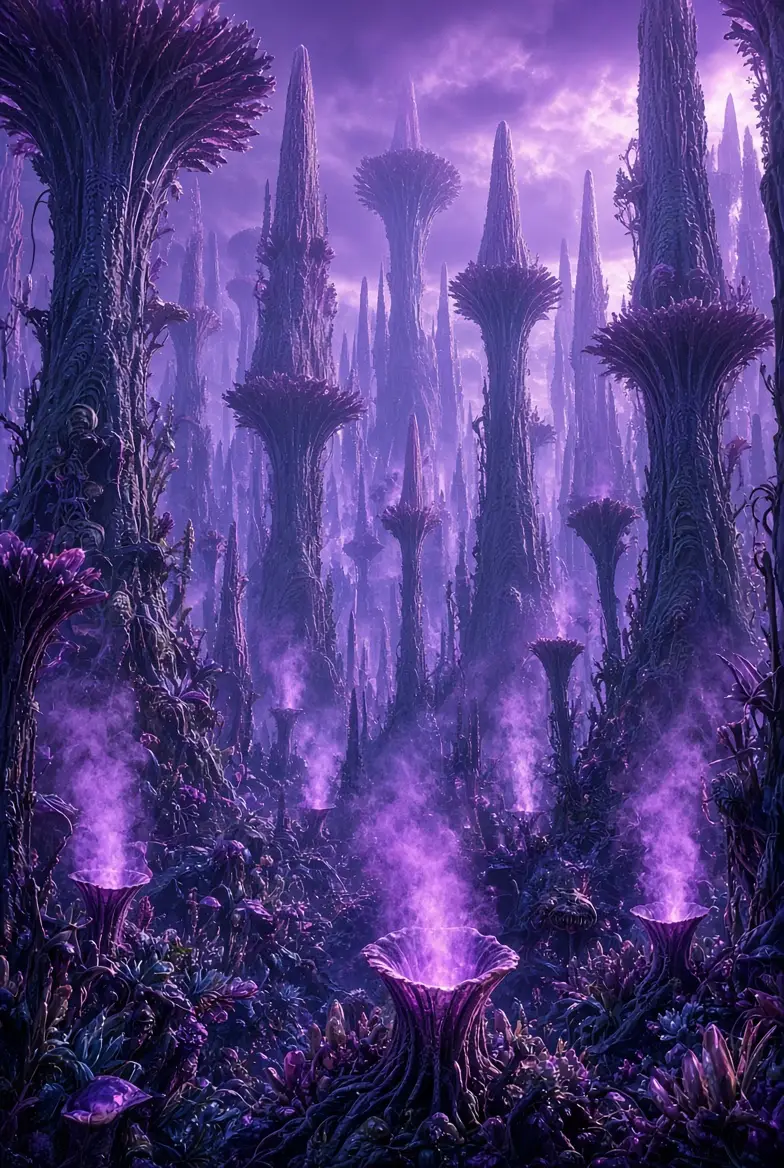
Though most forest worlds are green to produce atmospheres for carbon-based life (the majority of life in the universe), there are others like the Purple Forest World 217 that produce atmospheres for different kinds of life.
The most unusual fact about these planets: there are no bodies of water on the surface, yet the planets are between 40% and 60% water by mass.
Classification
Parent: Green Worlds. Linked events: Planetary Rebuilds.